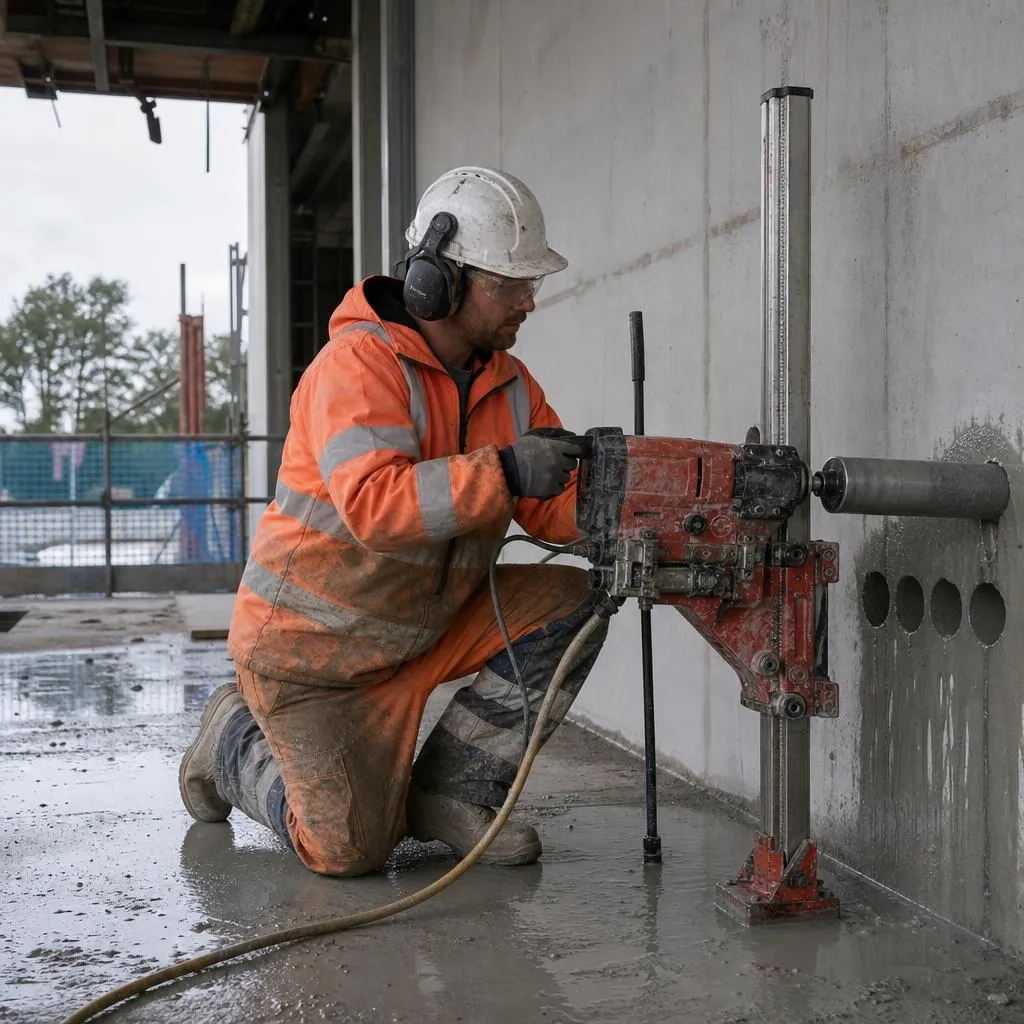
Diamond Drilling and Concrete Cutting Specialists in Essex
Precise core holes and clean cuts through reinforced concrete, brick and masonry. We cover Southend-on-Sea, Basildon, Chelmsford, Brentwood, Grays and across Essex.
- Free site survey before we quote
- Non-percussive, low vibration methods
- Water-fed dust suppression on every core
- We scan before we cut
- Covering Essex from Leigh-on-Sea
We are a diamond drilling and concrete cutting contractor based in Leigh-on-Sea, working across Essex. We core holes, saw slabs and walls, form structural openings and remove concrete without breaking it out. Low vibration, dust controlled, and scanned before we cut.
The diamond drilling and cutting jobs we get asked for most
Most enquiries start with a hole. Our diamond drilling service covers anything from a 52mm core for a single cable to a 1000mm penetration for a riser, drilled dead straight and to the millimetre. Reinforced concrete, brick, stone and blockwork are all fair game.
When the job is defined by the outcome rather than the method, that is core drilling for soil pipes, flues and ducting. Same rig, same diamond bits, but the conversation is about the pipe that has to pass through, not the barrel doing the work.
For slabs, roads and yards we run floor saws that give a straight, clean edge. Our floor sawing across Essex handles trenches for drainage, expansion joints and cut-and-lift slab removal, with the cut depth set to suit the section.
For openings in structural walls we track-mount the blade and cut square, accurate edges. Our wall sawing and track sawing forms doorways, window openings and lift shaft penetrations in concrete and heavy masonry, with wire sawing brought in where a saw cannot reach.
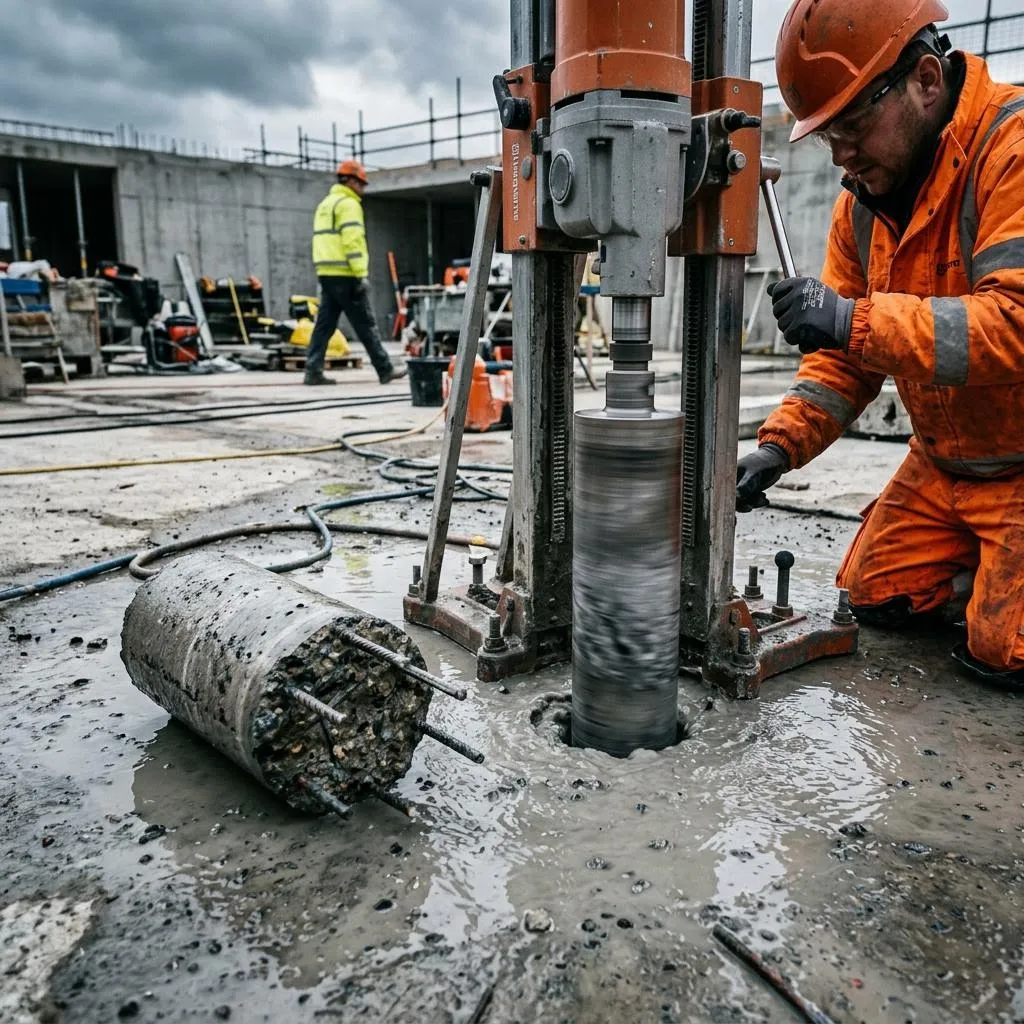
Where our diamond drilling covers across Essex
We are set up in Leigh-on-Sea and reach across the county. These are the towns where we work most often. Each has its own page with local detail.
How a diamond drilling job runs, from first call to clean finish
Tell us the job
Ring or send the details. Hole sizes, wall or slab, the material and rough access. That is usually enough to talk it through.
We survey and quote
For anything beyond a single core we check the site, confirm power and water, and price the work properly before we start.
We scan and set up
We scan for rebar, cables and services, mark out, then anchor the rig and protect the surrounding area against dust and slurry.
We cut and clear up
We drill or cut to the line, remove the cores or sections, and leave the area swept and tidy for the next trade.
Why diamond drilling instead of breaking it out
A breaker gets a hole in the end. It also cracks the surrounding slab, throws dust everywhere and shakes the building. Diamond drilling avoids all of that.
The method is non-percussive. There is no hammer action, so vibration stays low and the finished edge is clean and square. That matters when the concrete is structural and a rough opening would weaken it.
Water-fed dust suppression keeps airborne silica down and cools the bit as it cuts. The hole comes out accurate, to the diameter and position marked, which is what the following trades need.
Because it is quiet and controlled, we can work in occupied offices, live shops, hospitals and flats where a breaker would never be allowed. Less mess, less risk, less making good afterwards.
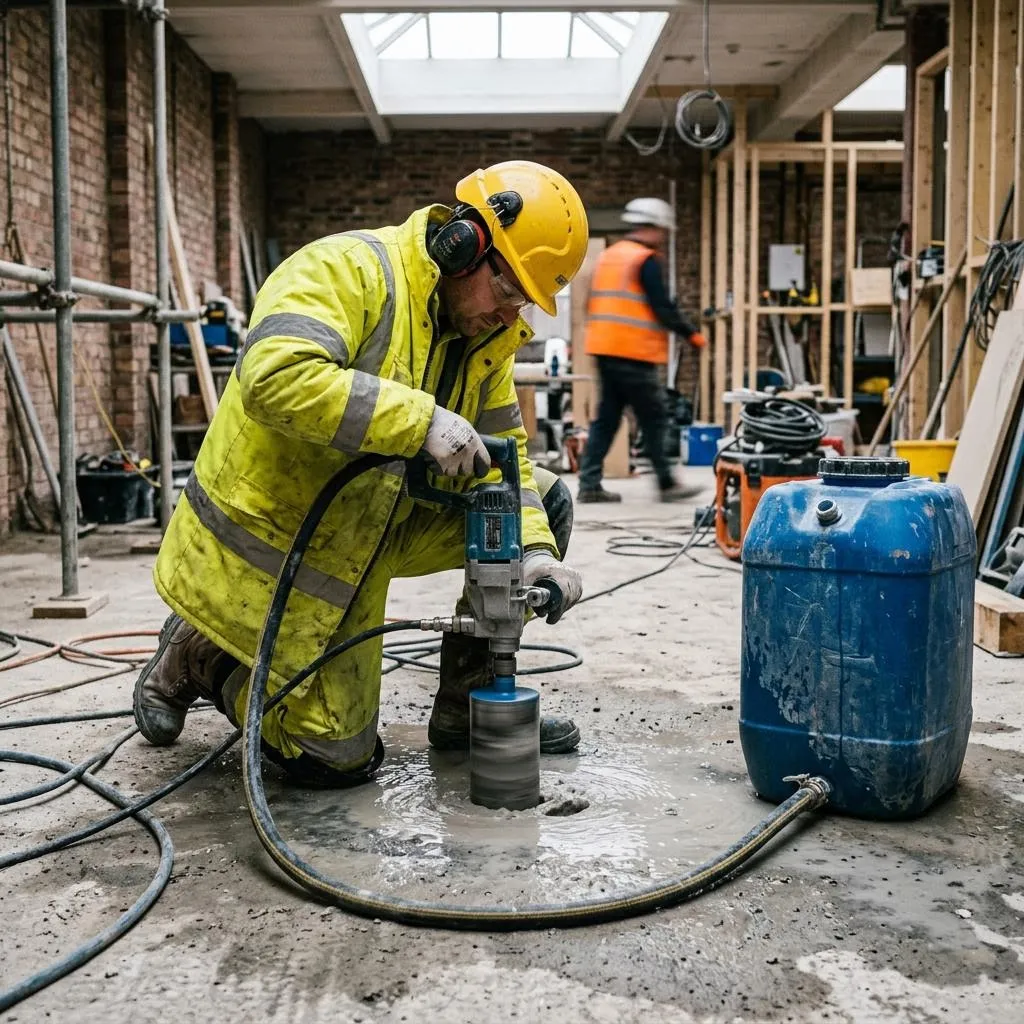
Materials we diamond drill and cut through
The material sets the pace of the job and the choice of bit. We work across all of the following.
- Reinforced concrete. Slabs, walls and columns with rebar. Diamond bits cut straight through the reinforcement.
- Post-tensioned concrete. Handled with care and always scanned first, because a cut tendon is dangerous and costly.
- Brickwork and blockwork. Solid and cavity walls, party walls and internal blockwork.
- Masonry and stone. Older solid construction, including harder natural stone.
- Asphalt and tarmac. Yards, car parks and access roads where a floor saw gives the cleanest edge.
Who we work for
Most of our work comes from the trades who need a hole or an opening before they can carry on. We fit in around your programme.
- M and E contractors routing services through floors and walls
- Main contractors needing openings, cuts and controlled removal
- Shopfitters working in live retail units
- Plumbers and heating engineers running soil pipes and flues
- Electrical contractors coring for cable and containment
- HVAC installers cutting for ducting and plant
- Groundworkers cutting slabs, roads and drainage runs
- Structural engineers specifying openings and penetrations
- Facilities managers dealing with alterations in occupied buildings
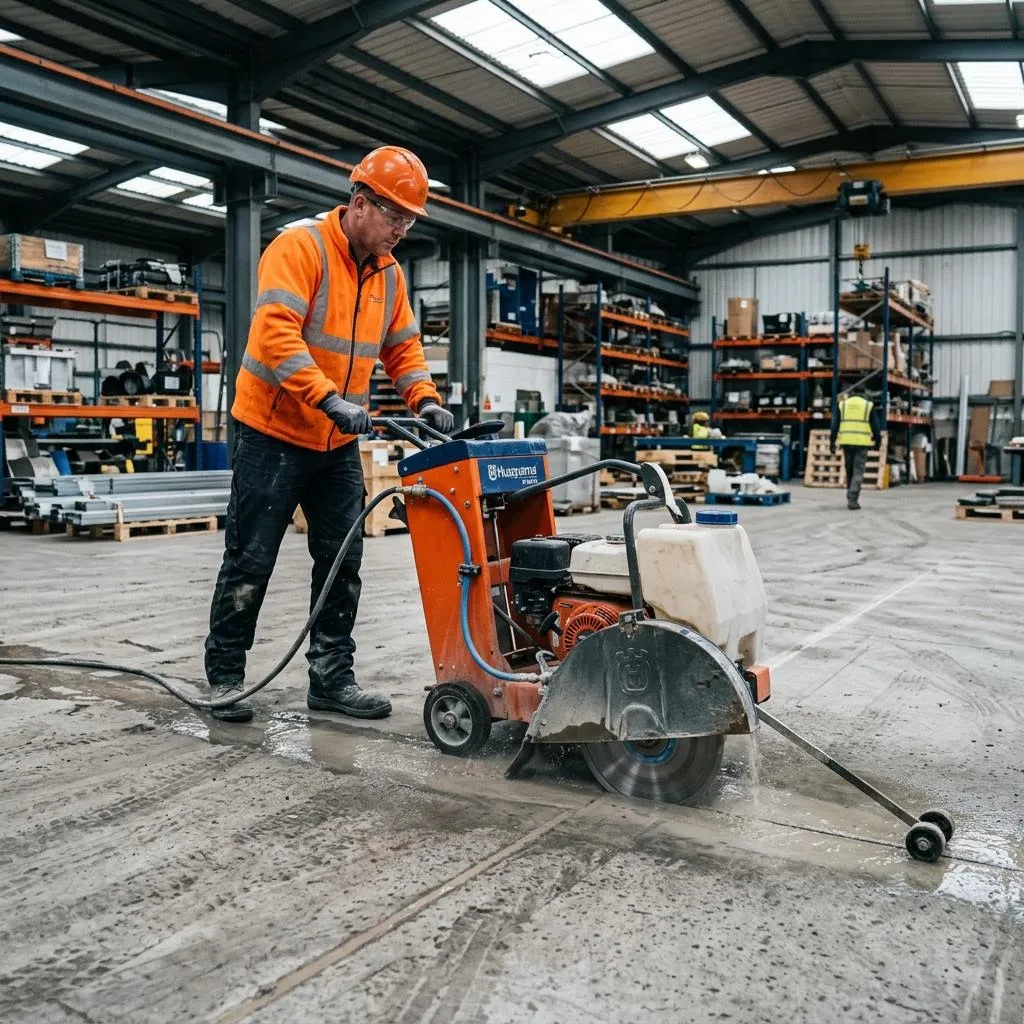

Dust and silica control when we drill and cut concrete
Cutting and drilling concrete releases respirable crystalline silica. It is a serious health risk, which is why dust control is built into how we work rather than added on afterwards.
The HSE has written guidance for exactly this activity. Its control sheet CN8, diamond coring and hole cutting, sets out water suppression for wet coring, on-tool extraction with M or H class units for dry coring, slurry clean-up, and respiratory protection where dry work runs on.
We work to that standard. On most cores we run a water feed that suppresses dust at the bit and contain the slurry as we go. Where water is not allowed we switch to extraction and suitable respiratory protection instead.
We also scan before we cut, so that a core does not find rebar, a post-tension cable or a live service by accident. It protects the building, and it protects the people on site.
Diamond drilling and concrete cutting FAQs
What size holes can you diamond drill?
We core from around 10mm up to 1000mm in diameter. A 52mm hole suits a single cable or a condensate pipe. A 107mm to 152mm core takes a soil pipe or a flue. Larger diameters and stitch drilled openings cover ducting, risers and structural penetrations.
Will diamond drilling crack the concrete or shake the building?
No. Diamond drilling is non-percussive, so there is no hammer action. The bit grinds a clean edge with very little vibration. That is why it suits occupied offices, live retail units, hospitals and flats where breaking out would cause damage and disturbance.
How do you deal with dust and water?
Wet coring uses a water feed that suppresses dust at the bit and cools the barrel, and we vacuum and contain the slurry. Where water cannot be used we run on-tool extraction with an M or H class unit, in line with HSE guidance CN8 for diamond coring and hole cutting.
Can you drill reinforced and post-tensioned concrete?
Yes. Diamond bits cut straight through reinforcement. Post-tensioned slabs need care because cutting a live tendon is dangerous and expensive, so we scan first with GPR to map cables and services before any core goes in.
Which areas do you cover?
We work across Essex from our base in Leigh-on-Sea, including Southend-on-Sea, Basildon, Chelmsford, Brentwood, Grays, Rayleigh, Benfleet and Canvey Island. Ring us with a postcode and we will confirm we can reach you.
Do you offer a site survey before quoting?
Yes. For anything beyond a straightforward single core we prefer to survey the site so we can check access, power, water, the material and the orientation. It means the price we give is the price you pay, with no surprises once we arrive.
Find our diamond drilling base in Essex
My Diamond Drilling Essex
282 Leigh Road, Leigh-on-Sea, Essex, SS9 1BW
Phone: 01702 967100
Based in Leigh-on-Sea, covering Essex including Southend-on-Sea, Basildon, Chelmsford, Brentwood, Grays, Rayleigh, Benfleet and Canvey Island.
Ready to get the job priced?
Tell us what needs drilling or cutting and where. We respond to every enquiry, usually the same working day.