Diamond drilling is priced per hole or per day, and the figure swings a lot with the diameter, the material and the access. This guide sets out the published national ranges so you have a starting point, then explains what actually moves the price on a real Essex job.
One thing first. We do not publish our own rates here, because a fair price depends on the job in front of us. Every figure below is a third-party guide figure, clearly attributed, and none of it is a quote from us.
What does diamond drilling cost per hole?
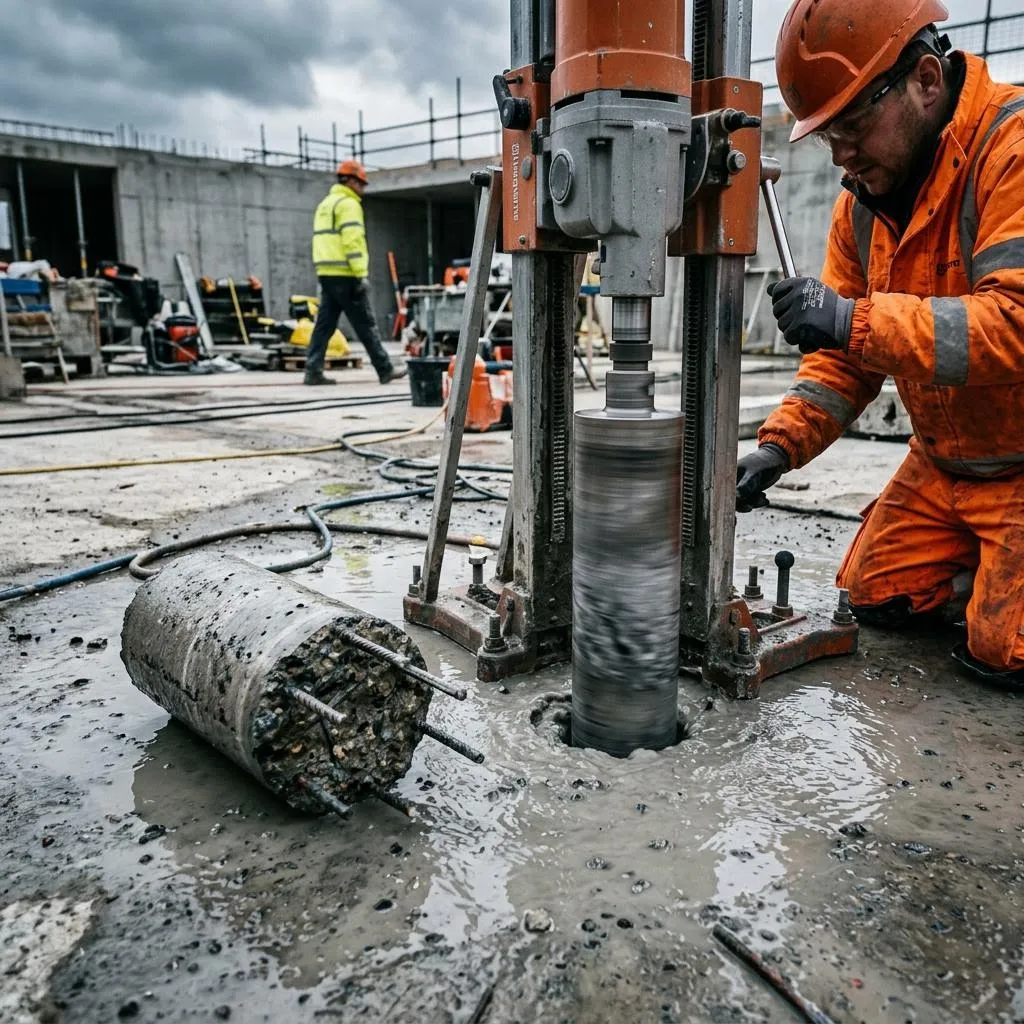
Per-hole pricing is the most common way small drilling jobs are quoted. The diameter is the single biggest variable, because a wider barrel cuts more material and takes longer.
According to Checkatrade’s cost guide, the per-hole ranges by diameter are roughly as follows. These are national guide figures, not our rates.
- 52mm hole: around £26 to £35 (Checkatrade national guide)
- 127mm hole: around £29 to £36 (Checkatrade national guide)
- 152mm hole: around £37 to £46 (Checkatrade national guide)
- 300mm hole: around £86 to £116 (Checkatrade national guide)
Read those as a rough shape, not a promise. A 52mm resin fixing in a block wall and a 52mm core through a heavily reinforced slab are not the same job, even though the diameter matches. The material and the reinforcement change the time on the tool, and time is what you pay for.
For the common bore sizes and what each one is used for, our core drilling service sets out the everyday hole diameters in plain terms.
Is there a day rate for diamond drilling?
Yes, and on a lot of jobs a day rate is fairer than counting holes. When a building has dozens of penetrations, or the access is slow, or the operative spends as long moving and setting up as drilling, a day rate reflects the real work better.
According to Checkatrade’s cost guide, a two-person team day rate is around £400. Again, that is a national guide figure, not a rate we are quoting. The published figure gives you a sense of scale for a full day of drilling with two operatives on site.
Which basis suits your job depends on the number and spread of the holes. We work that out once we have seen the site, and we tell you which way we think is fairer rather than defaulting to whichever earns more.
What are diamond drilling prices in Essex?
Buyers usually want a single number to hold in their head before they ring round. There is a published local figure for that.
According to Checkatrade’s Essex cost guide, buyers should expect to pay between £108 and £229, with an average of around £155 for diamond drilling. That is a national guide figure applied to Essex, and it describes a typical single job rather than any particular one. It is not a quote from us.
A small job with one or two straightforward cores can sit below that band. A job with several large cores through a reinforced soffit, out of hours, in a building that has to stay open, can sit well above it. The range is a guide, not a ceiling and not a floor.
What moves the diamond drilling price?
The published figures give you the shape. The detail of your job decides where it lands. These are the drivers that matter most.
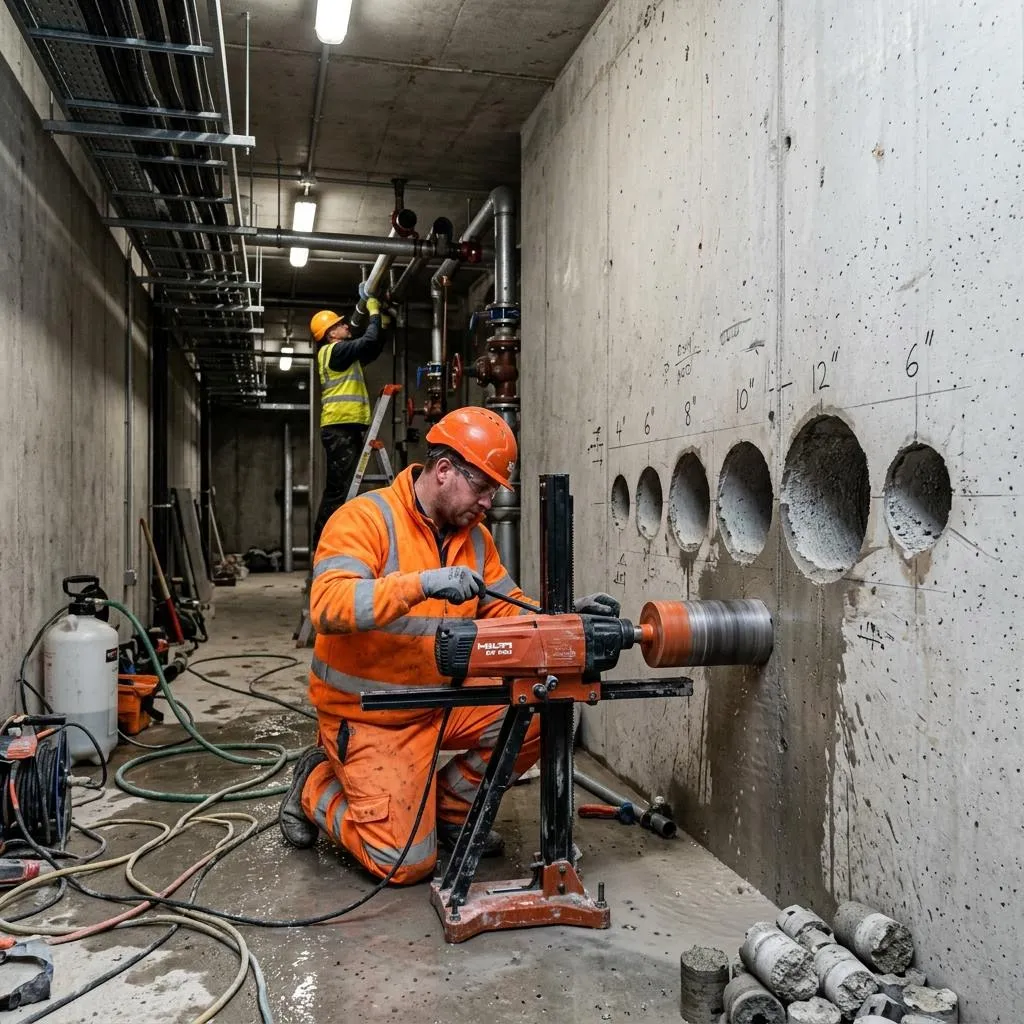
Diameter. The biggest single variable. A wider core cuts more material and takes longer, which is why the published ranges climb steeply from 52mm to 300mm.
Depth. A thick wall or a deep slab means more cutting per hole, and very deep cores are taken in stages with an extended barrel. More material means more time.
Reinforcement. Diamond segments cut through rebar and mesh, but heavily reinforced or post-tensioned concrete is slower and wears the barrel harder than plain block or brick. Material type and reinforcement together are a major driver.
Orientation. Walls are the quickest. Floors are next. Overhead drilling into a soffit or ceiling is slowest, because of the rig anchoring and the slurry control needed to stop water running back down.
Access and setup. A ground-floor plant room with power and water to hand is quick to rig. Work up a scaffold, in a tight riser, or on a floor that has to be protected first all add setup time before a hole is even started.
Number of holes. More holes spread the setup cost, so a run of cores is usually cheaper per hole than a single isolated one. This is often the point at which a day rate becomes the fairer basis.
Waste and core removal. The cut cylinders and the slurry have to go somewhere. Catching slurry at the hole, protecting finished floors and removing cores from site all take time and are part of the price. On a job with several large cores, the removed material adds up quickly.
Site protection and dust management. An occupied office or a finished floor has to be sheeted and protected before work starts, and the dust kept down at source. That setup is time on site before a hole is drilled, and it is a genuine cost rather than an optional extra.
Timing constraints. If the building's rules dictate when noisy work can happen, contractors generally price that in, along with any minimum call-out. These sit on top of the drilling itself.
Why we survey before we give a diamond drilling price
We price each job on its own details, and on most jobs that means a survey before we quote. It is the only honest way to give you a figure you can rely on rather than a guess dressed up as a number.
The survey confirms the material, the reinforcement, the hole positions, the access, and whether power and water are on site. Where there is any risk of cutting a critical bar or a live service, we use concrete scanning to find rebar and services first. That way the quote reflects the real work, and there are no surprises once the rig is set up.
What to send us so we can quote accurately
You can often save a site visit by sending the right detail up front. The more of this we have, the tighter the quote.
- The hole diameters and how many of each you need
- The material and thickness: reinforced concrete, brick, block or stone
- The orientation: wall, floor or overhead into a soffit
- The site address and postcode, and any access limits
- Whether power and water are available on site
- Any drawings, and the working hours the building allows
With that in hand we can tell you whether per-hole or a day rate is fairer, flag anything that needs a survey, and give you a clear figure. For the full run through of how a job goes from enquiry to handover, see how we work on a drilling and cutting job.
Diamond drilling cost FAQs
How much does diamond drilling cost per hole?
According to Checkatrade’s cost guide, expect to pay in the region of £26 to £35 for a 52mm hole, £29 to £36 for 127mm, £37 to £46 for 152mm, and £86 to £116 for a 300mm hole. Those are national guide figures, not our rates. The real price for your job depends on the diameter, the material, the number of holes and the access, which is why we survey and price each job on its own details.
Is there a day rate for diamond drilling?
According to Checkatrade’s cost guide, a two-person team day rate is around £400 as a national guide figure. A day rate tends to make sense when there are a lot of holes, when access is slow, or when the work is spread across a building. Per-hole pricing tends to suit a small, well-defined job. We work out which is fairer for your job once we have seen it.
What should I budget for a typical diamond drilling job in Essex?
According to Checkatrade’s Essex cost guide, buyers should expect to pay between £108 and £229, with an average of around £155 for diamond drilling. That is a national guide figure for a typical single job and it is not a quote from us. Your figure could sit above or below that band depending on diameter, reinforcement, orientation and how many holes are needed.
Why is drilling a ceiling more expensive than a wall?
Overhead drilling is slower and more involved. The rig has to be anchored to the soffit rather than braced off the floor, and slurry has to be caught at the hole with a collection ring or vacuum so it does not run back down. Floors sit between the two. That extra setup and control is one of the drivers that pushes a price up.
Do the diamond drilling cost figures include VAT?
The published figures we cite are national guide ranges and you should assume prices in this trade are commonly quoted excluding VAT, which is the business-to-business norm. When we price your job we make clear what is and is not included, so there is no confusion when the invoice arrives.
Want a real figure for your job?
Send the diameters, the material and the site location. We respond to every enquiry, usually the same working day, and we price each job on its own details after a survey.
Or send the details over
My Diamond Drilling Essex covers the county from our Leigh-on-Sea base.